24/7 Customer Support

How to Select Commercial Garage Doors?

Table of Contents

How to Select Commercial Garage Doors?

Selecting the right commercial garage door starts with matching the door type, size, and material to the facility’s daily operations and current local safety standards. The right choice reduces costly downtime, supports long-term energy efficiency, and holds up reliably under frequent daily use.

Business owners who treat a commercial garage door installation as a one-time decision often end up replacing a door far sooner than expected. This guide covers common door types, standard sizing, factors that affect installation, and the steps to choose the right door.
Key Takeaways

  • Door type and material affect durability, insulation, and daily operating cost.
  • Standard sizing varies significantly between loading docks and vehicle bays.
  • Cycle rating determines whether a door holds up under frequent use.
  • Fire protection codes often dictate which door types are permitted.
  • A clear selection process prevents an expensive, premature replacement later.

What Types of Commercial Garage Doors Are Available?

What Types of Commercial Garage Doors Are Available?

Commercial buildings choose from a small set of door types, and each one suits a different combination of use, budget, and building requirements.

Types worth considering for a commercial building include:

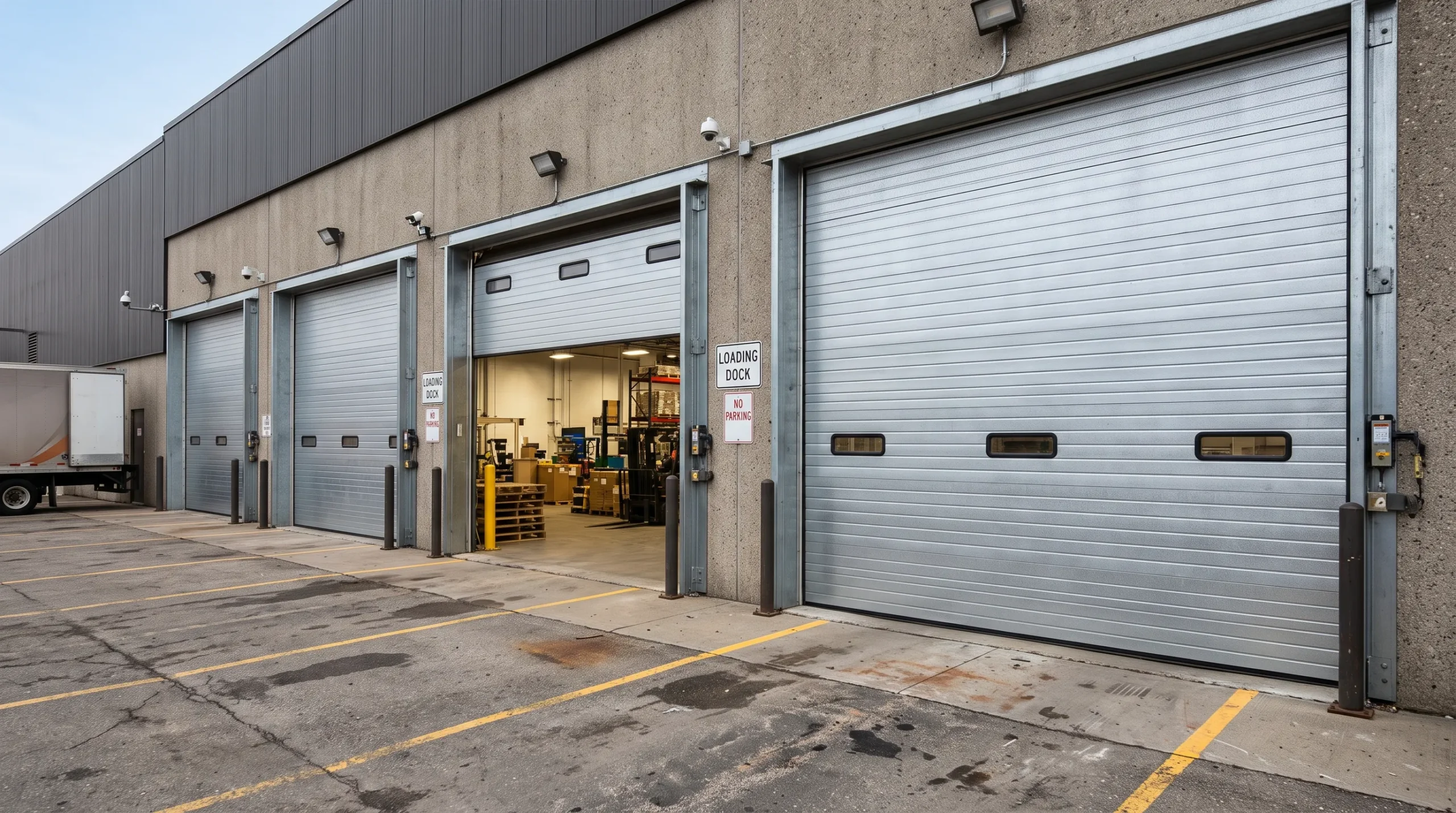
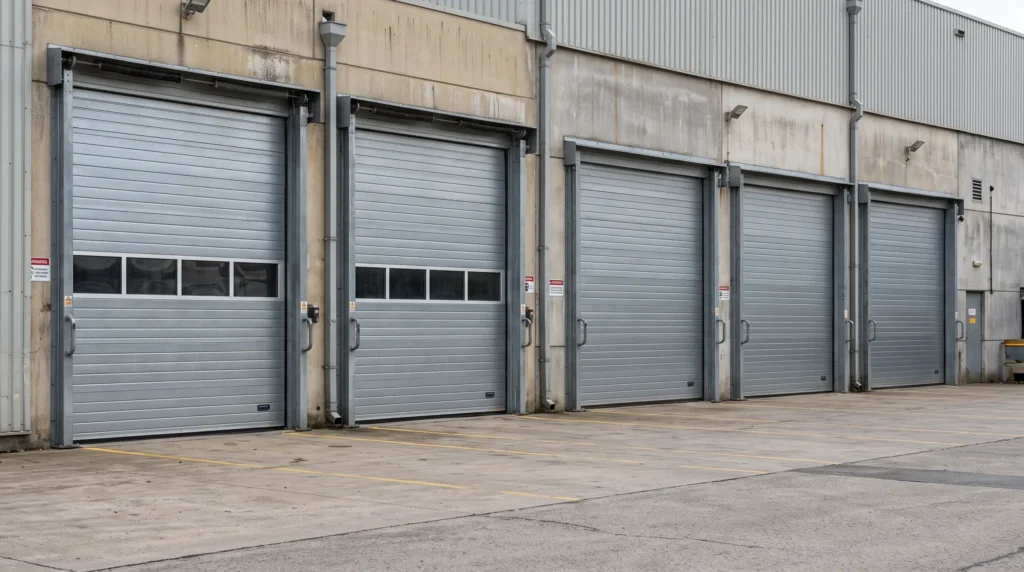
  • Sectional steel doors, ideal for loading docks and frequent daily use.
  • Aluminum and glass doors, suited to retail spaces needing natural light.
  • Overhead garage doors, built for industrial facilities with space constraints.
  • Fire doors, required in areas needing fire separation by code.
  • Security grille doors, chosen for buildings needing visible security features.

To review each type in greater depth before narrowing the full list down to a final choice, read our guide on Common Types of Commercial Garage Doors, which breaks down the strengths of every option available.

Standard Sizes for a Commercial Garage Door

Commercial garage door sizes vary widely depending on the type of vehicle or equipment a facility needs to move through the opening every day.

Facility Type

Standard Size Range

Typical Vehicle or Equipment

Loading docks

8 to 10 ft wide, 8 to 10 ft high

Box trucks and standard delivery vans

Vehicle bays

10 to 12 ft wide, 12 to 14 ft high

Service vehicles and small fleet trucks

Industrial equipment bays

12 to 20 ft wide, 14 to 16 ft high

Forklifts, pallet loaders, oversized freight

Standard overhead doors

8 to 9 ft wide, 7 to 8 ft high

Passenger vehicles and light equipment

Oversized custom openings

20+ ft wide, 16+ ft high

Semi-trailers and specialized machinery

To confirm the exact size a specific facility requires before finalizing any order, read our guide on Standard Commercial Garage Door Sizes for Facilities, which walks through common dimensions by building type.

Key Factors That Affect Commercial Garage Door Installation

Considerations beyond size and type influence which commercial garage door installation ultimately makes sense for a business.

Factors worth weighing during the selection process include:

  • Local building codes may restrict certain door types in specific zones.
  • Energy efficiency needs affect whether insulation should factor into the choice.
  • Frequent use volume determines how durable the door truly needs to be.
  • Budget constraints often narrow the list of realistic material choices.
  • Scheduling commercial garage door maintenance in advance extends the door’s usable lifespan.

To weigh each factor against a facility’s specific needs before making a final call, read our guide on Key Factors That Affect Commercial Garage Door Installation, which covers each one in more detail.

How to Select the Right Commercial Garage Door

Measuring the Opening Correctly

An incorrectly measured opening often leads to a door that doesn’t fit properly or wastes valuable overhead space.

Measurement details worth confirming include:

  • Exact width and height of the opening at its narrowest point.
  • Available headroom for the track and spring assembly above the door.
  • Side room clearance needed for the track hardware on both sides.
  • Backroom depth required for the door to fully retract when open.
  • Floor levelness, since an uneven floor affects the door’s final seal.

Confirming every measurement carefully before ordering prevents a costly mismatch between the new door and the actual opening.

Matching Door Material to Operational Needs

Material choice affects durability, insulation, and how well a door holds up under facility-specific daily use over time.

Considerations for matching material to operational needs include:

  • Steel garage doors suit facilities needing robust protection and durability.
  • Aluminum doors suit facilities prioritizing natural light and curb appeal.
  • Insulated panels reduce cooling costs and support better temperature control.
  • Corrosion resistance matters more in facilities with high humidity exposure.
  • Noise reduction matters most for facilities near occupied office space.

Material quality, more than any single feature, determines how often a facility schedules commercial garage door repair over the years.

Confirming Cycle Rating for Daily Use

Cycle rating measures how many times a door can open and close before requiring major service, which matters most for frequent use.

Details worth confirming about cycle rating include:

  • Facilities with frequent use need a higher cycle rating than average.
  • A low cycle rating leads to premature wear and costly downtime.
  • Manufacturer specifications list the exact cycle rating for each model.
  • Installers with decades of experience often know which ratings actually hold up.
  • A mismatched cycle rating voids most manufacturer warranties early.

Choosing a cycle rating based on actual daily use prevents most premature failures before the warranty period even ends.

Reviewing Fire and Safety Code Requirements

Fire and safety code compliance affects which door types a facility can legally install in certain zoned or high-risk areas.

Code requirements worth reviewing include:

  • International Building Code standards often dictate fire door placement.
  • Fire separation requirements apply to areas storing hazardous materials.
  • Safety standards may require security features beyond a standard lock.
  • Fire door inspections must occur on a regular, documented schedule.
  • Local safety risks specific to a facility may require additional protection.

Confirming code requirements before purchase avoids a costly, non-compliant installation that fails inspection later.

Questions to Ask a Professional Before Making a Final Decision

A short list of direct questions helps confirm a facility is making the best commercial garage door choice for its specific needs.

Questions worth asking before finalizing a decision include:

  • What cycle rating does this door carry under normal daily operations?
  • Does this material meet local building codes for fire separation?
  • Does the warranty cover a full commercial garage door replacement, or only individual parts?
  • What lead time should a business expect before installation can begin?
  • What ongoing maintenance plan does the company recommend after installation?

Asking these questions directly narrows the decision down to a door genuinely suited for the facility’s operational needs.
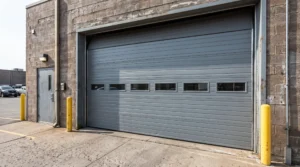
The Right Commercial Garage Door Reduces Costly Downtime for Years

The Right Commercial Garage Door Reduces Costly Downtime for Years

A commercial garage door selection comes down to type, size, cycle rating, and code compliance, all weighed together as a single decision. Businesses that treat this selection process casually often pay for it through repairs, downtime, or an early, unplanned replacement.

BT1 Dock and Door helps Nashville facilities work through every stage of commercial garage door selection, from initial measurements through final installation. Contact us or give us a call today, and let our team help select the right commercial garage door for your specific operational needs.
Frequently Asked Questions

What is the most durable material for a commercial garage door?

Steel garage doors typically offer the most durability for facilities with frequent use and heavy daily traffic. Aluminum doors trade some durability for lighter weight and better natural light in retail spaces.

Insulation matters significantly for facilities trying to manage cooling costs and maintain consistent temperature control year-round. Uninsulated doors work fine for facilities with minimal climate control needs or infrequent use.

Loading docks with frequent daily use typically need a higher cycle rating than a standard overhead door. Check manufacturer specifications for the exact cycle rating before purchase.

Many commercial garage doors must meet fire separation requirements under the International Building Code, depending on the facility’s use. A licensed installer confirms which code requirements apply to a specific building type.

A well-maintained commercial garage door often lasts fifteen to twenty years depending on material, cycle rating, and daily use. Regular commercial garage door maintenance can extend this lifespan well beyond the manufacturer’s baseline estimate.

Loading dock doors typically range from eight to ten feet wide, though exact sizing depends on the vehicles using the dock. Custom sizing is common for facilities handling oversized equipment or specialized freight.

Insulated doors often pay for themselves over time through lower energy bills and reduced strain on climate control systems. Facilities with consistent daily use typically see the fastest return on investment.

Sectional doors use hinged panels that fold as they open, while overhead doors typically operate as a single solid panel. Sectional doors tend to work better in facilities with limited overhead space.

Security grilles provide visible security and ventilation, making them a popular option for retail spaces that need both protection and airflow. Standard commercial doors offer more insulation but less visibility for browsing customers.

Facilities should confirm cycle rating, code compliance, warranty terms, and expected lead time before finalizing any purchase decision. Asking about ongoing maintenance requirements also helps set realistic expectations for the door’s operational life.