24/7 Customer Support

Key Factors That Affect Commercial Garage Door Installation

Table of Contents

Key Factors That Affect Commercial Garage Door Installation

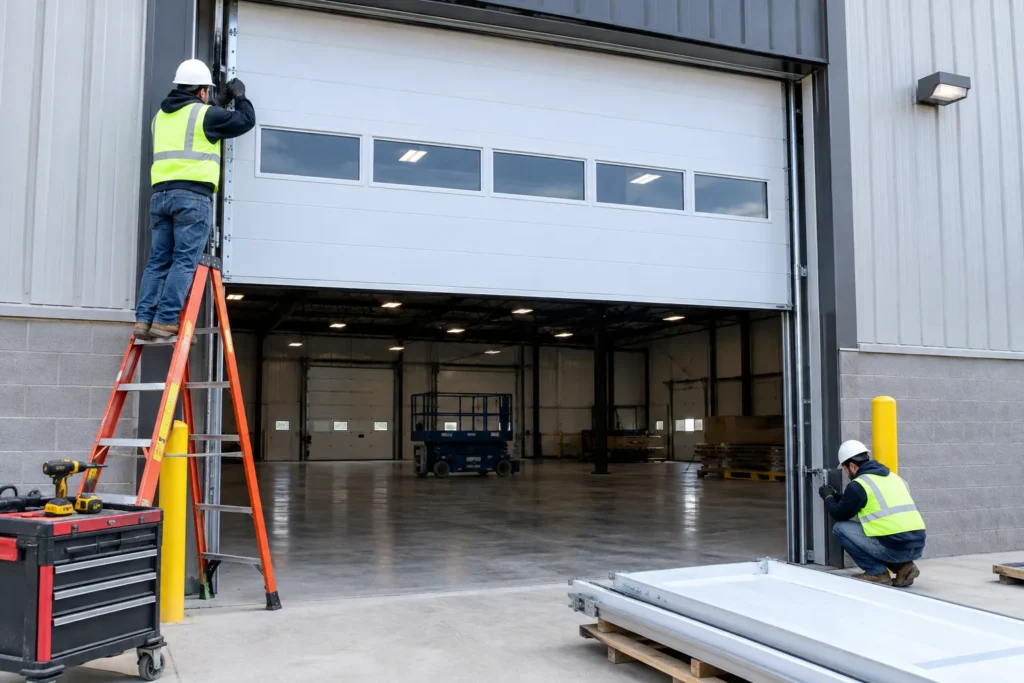
Building codes, facility size, energy efficiency, and long-term maintenance costs rank among the most critical factors that affect a commercial garage door installation. Overlooking even one of these factors often leads to a door that fails to meet the facility’s actual operational demands.

A poorly planned commercial garage door installation often costs a business far more in repairs and downtime than the original project ever would have. This guide breaks down the major factors involved, how each one narrows the final choice, and the last considerations worth reviewing before committing to a decision.
Key Takeaways

  • Building codes often restrict which door types a facility can legally install.
  • Facility size and daily operations volume affect the required cycle rating.
  • Energy efficiency needs influence whether insulation should factor into the decision.
  • Budget constraints directly affect long-term maintenance and repair costs.
  • Weighing every factor together prevents a costly, mismatched installation.

Major Factors That Influence Installation Decisions

Major Factors That Influence Installation Decisions

Commercial garage door installation depends on a specific, well-defined set of factors that interact with each other instead of standing alone.

Factor

What It Affects

Why It Matters

Building codes

Which door types are legally permitted

Avoids a non-compliant installation that fails inspection

Facility size

Required door dimensions and cycle rating

Prevents bottlenecks during daily operations

Energy efficiency

Insulation and material choice

Reduces long-term energy costs and bills

Budget

Available material and installation options

Balances upfront cost against long-term value

Maintenance needs

Ongoing service and repair frequency

Extends the door’s usable lifespan significantly

No single factor here determines the final decision entirely on its own, since each one pulls the outcome in a different direction.

Building Codes and Fire Safety Requirements

Local building codes often dictate which commercial door types a facility can legally install in specific zones or areas.

Code-related considerations worth reviewing include:

  • Fire separation requirements that apply to hazardous material storage.
  • International Building Code standards dictating fire door placement.
  • Local safety standards requiring security features beyond a standard lock.
  • Fire door inspections required on a regular, documented schedule.
  • Permitted door types varying significantly across different building zones.

To confirm which door types actually meet these code requirements before finalizing a decision, read our guide on Common Types of Commercial Garage Doors, which breaks down each option in detail.

Facility Size and Daily Operations Volume

A facility’s size and daily operations volume directly affect which door dimensions and cycle rating make sense for the building.

Considerations tied to facility size and operations include:

  • Loading docks and industrial facilities generally needing wider door openings.
  • Overhead space limiting which track systems fit a specific building.
  • Frequent use raising the required cycle rating significantly over time.
  • Retail spaces often needing smaller, more accessible door dimensions.
  • Facilities planning an industrial overhead door installation often need reinforced structural support to handle the larger door panels. 

To confirm the exact dimensions a specific facility requires before finalizing any order, read our guide on Standard Sizes for a Commercial Garage Door, which walks through common dimensions by building type.

Energy Efficiency and Climate Control Needs

Energy efficiency needs affect whether insulation should factor into a commercial garage door installation decision.

Considerations tied to energy efficiency include:

  • Insulated panels reducing cooling costs in climate-controlled facilities.
  • Temperature control mattering most in facilities storing sensitive materials.
  • Uninsulated doors working fine for facilities with minimal climate needs.
  • Energy bills often dropping noticeably after an insulated door installation.
  • The Department of Energy recognizing insulation as a meaningful cost factor.

Facilities prioritizing temperature control over budget typically choose insulated panels despite the higher upfront material cost.

Budget and Long-Term Maintenance Costs

Budget constraints affect which materials and installation options remain realistic, though the cheapest option upfront often costs more over time.

Considerations tied to budget and maintenance include:

  • Steel garage doors costing more upfront but lasting longer overall.
  • Aluminum doors costing less initially but requiring more frequent upkeep.
  • Corrosion resistance reducing long-term repair costs in humid climates.
  • Scheduling maintenance early extends any door’s usable lifespan considerably.
  • Cycle rating mismatches often voiding manufacturer warranties early.

A lower upfront budget rarely stays lower once ongoing commercial garage door maintenance costs are factored into the door’s full lifespan.

Final Considerations Before Committing to a Decision

A short list of final considerations helps confirm every major factor has been weighed before signing off on an installation.

Considerations worth reviewing one final time include:

  • Confirming the door type meets all applicable building codes.
  • Verifying the dimensions match the facility’s actual daily operations.
  • Reviewing insulation needs against the facility’s climate control demands.
  • Whether commercial garage door repair support is included as part of the initial agreement.
  • Comparing installer experience, since decades of experience often prevents costly mistakes.

To weigh these final considerations against the full selection process from start to finish before making any commitment, read our guide on How to Select Commercial Garage Doors, which covers every step in greater depth.
Every Factor Considered Together Leads to the Right Installation

Every Factor Considered Together Leads to the Right Installation

Commercial garage door installation is a complex decision, and no single factor determines the right outcome entirely on its own. Businesses that weigh building codes, size, energy efficiency, and budget together end up with a door built specifically for the job it will actually perform every day.

BT1 Dock and Door works directly with Nashville facilities to weigh every factor that affects a commercial garage door installation, from the first measurement through final sign-off. Contact us or give us a call today, and let our team confirm the right choice for a facility’s specific operational needs.
Frequently Asked Questions

How do building codes affect commercial garage door installation?

Building codes often restrict which door types a facility can install in certain zones, especially where fire separation is required. A licensed installer confirms which specific codes apply before any installation begins.

Facility size plays a major role, though daily operations volume and the type of equipment moving through the opening also affect final dimensions. Matching both size and use case prevents a door that becomes a bottleneck later.

Insulated doors make the most sense for facilities that need consistent temperature control or face high energy costs year-round. Facilities with minimal climate control needs may not see enough savings to justify the added upfront cost.

Choosing the cheapest door upfront often leads to higher maintenance and repair costs over the door’s usable life. Balancing initial budget against expected maintenance needs typically produces better long-term value.

Cycle rating determines how many times a door can open and close before requiring major service, which matters most under frequent use. Facilities with high daily traffic should confirm cycle rating before finalizing any material choice.

Energy efficiency needs often push facilities toward insulated steel or aluminum panels over uninsulated alternatives. This choice affects both energy bills and how consistently the facility maintains its indoor temperature.

Steel doors generally require less frequent repair than lighter materials, though both benefit from regular scheduled maintenance. Corrosion resistance and cycle rating both affect how often repairs become necessary.

Building codes should always come first, since a non-compliant installation may need to be redone regardless of the budget spent. Budget then narrows the realistic options among the door types that meet those code requirements.

Installers with decades of experience typically catch sizing or code issues before they become expensive problems during installation. Choosing an experienced installer often reduces the risk of a costly, mismatched installation.

Long-term maintenance costs are often overlooked in favor of upfront price, even though they significantly affect the door’s total cost of ownership. Facilities that plan for maintenance from the start typically avoid unexpected expenses later.