24/7 Customer Support

Common Types of Commercial Garage Doors

Table of Contents

Common Types of Commercial Garage Doors

Commercial garage doors come in five main types: sectional steel, aluminum and glass, overhead, fire-rated, and security grille doors, each built for a different setting. Businesses that match the right door type to their specific needs avoid the costly downtime that comes with an ill-suited choice.

Understanding the differences between door types makes commercial garage door installation much simpler to plan from the start. This guide breaks down each type, the commercial applications it suits best, and the specific factors that separate a great option from a poor fit.
Key Takeaways

  • Sectional steel doors suit loading docks and industrial facilities needing durability.
  • Aluminum and glass doors bring natural light into retail spaces.
  • Fire-rated doors meet safety standards required in certain commercial buildings.
  • Security grilles combine visible protection with airflow for retail applications.
  • Overhead space and daily use volume both affect which type performs best.

Types of Commercial Garage Doors and Their Uses

Types of Commercial Garage Doors and Their Uses

Commercial buildings typically choose from a small set of door types, each one suited to a different combination of daily use, budget, and facility requirements.

Door Type

Material

Best Use Case

Sectional steel doors

Insulated steel panels

Loading docks and industrial facilities

Aluminum and glass doors

Aluminum panels with glazing

Retail spaces needing natural light

Overhead garage doors

Steel or aluminum

Facilities with limited overhead space

Fire-rated doors

Rated steel construction

Buildings requiring fire separation

Security grille doors

Rolling steel or aluminum

Retail spaces needing visible security

Daily operations at a facility, including traffic volume and equipment size, determine which commercial door type performs best over time. 

Sectional Steel Doors

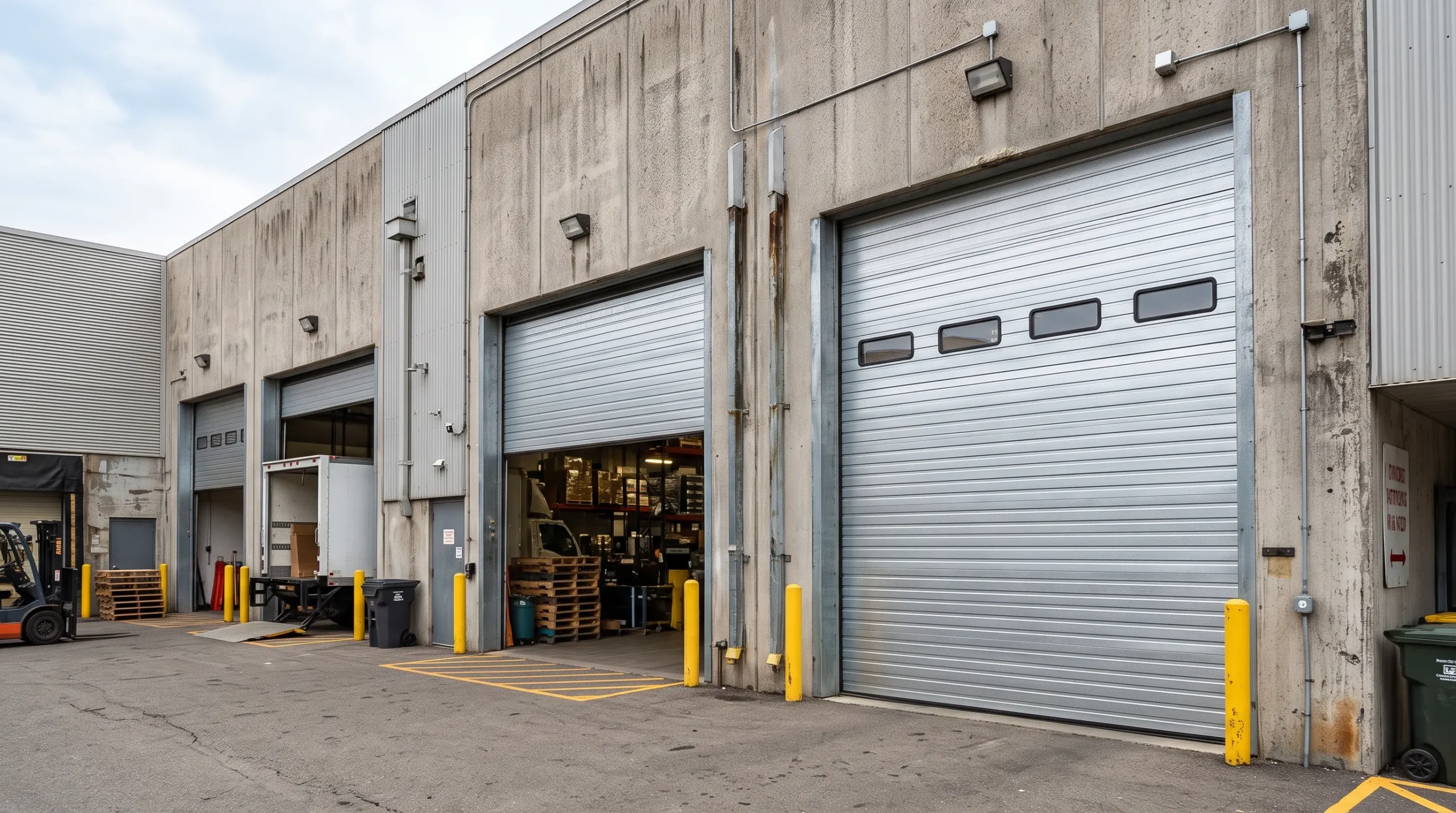
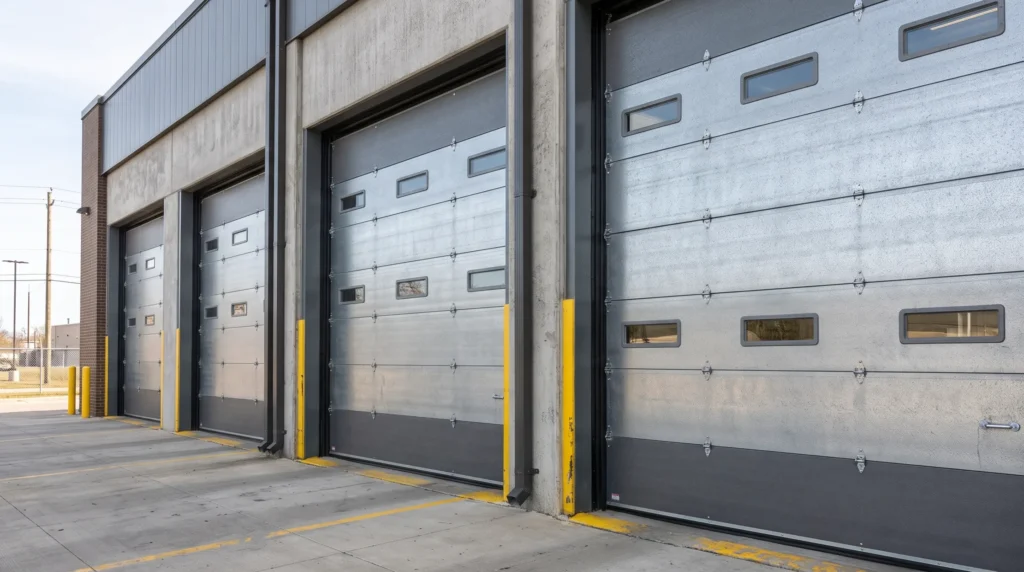
Sectional steel doors remain a popular option for facilities handling frequent use and heavy daily traffic across loading docks and industrial buildings.

Advantages worth noting for sectional steel doors include:

  • Robust protection against daily wear from vehicles and equipment.
  • Insulated panels that reduce energy costs and support temperature control.
  • Availability in standard and custom sizes for a range of opening dimensions.
  • Corrosion resistance that holds up well in humid or coastal climates.
  • Long service life under high cycle rating and frequent daily use.

Businesses weighing durability against upfront cost often schedule commercial garage door repairs far less frequently with steel than with lighter materials.

Aluminum and Glass Doors

Aluminum and glass doors bring natural light and curb appeal to retail spaces and commercial buildings that prioritize visibility over insulation.

Advantages worth noting for aluminum and glass doors include:

  • Lightweight aluminum panels that reduce strain on the opener system.
  • Glazing options that let natural light into the interior space.
  • A modern appearance that supports a business’s curb appeal.
  • Lower corrosion risk compared to standard steel in humid climates.
  • Custom panel configurations suited to unique storefront dimensions.

To understand how this door type fits into the larger selection process, including sizing and installation factors, read our guide on How to Select Commercial Garage Doors, which walks through every consideration in detail.

Overhead Garage Doors

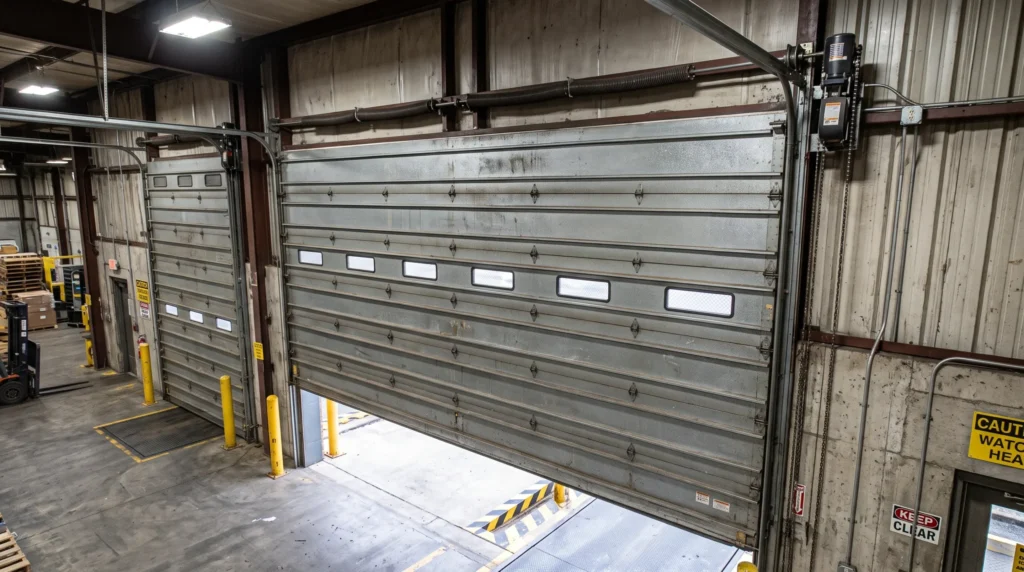
Overhead garage doors suit facilities with space constraints where a traditional swing-out door would not clear the available area.

Advantages worth noting for overhead garage doors include:

  • A vertical lift design that clears floor space entirely.
  • Compatibility with limited overhead space in retrofitted buildings.
  • Strong performance in industrial facilities with frequent daily use.
  • Availability in steel or aluminum depending on durability needs.
  • Simplified integration with an automatic opener system.

Facilities planning an industrial overhead door installation should confirm overhead clearance before finalizing the door’s specifications.

Fire-Rated Doors

Fire-rated doors meet safety standards required in commercial buildings where code mandates fire separation between sections.

Advantages worth noting for fire-rated doors include:

  • Compliance with International Building Code fire protection requirements.
  • Automatic closing mechanisms triggered during a fire event.
  • Rated steel construction built to slow the spread of fire.
  • Regular fire door inspections required to maintain code compliance.
  • Availability in standard sizes that match common opening dimensions.

To confirm the exact dimensions a fire-rated door needs to meet code in a specific facility, read our guide on Standard Sizes for a Commercial Garage Door, which walks through sizing requirements by building type.

Security Grille Doors

Security grille doors combine visible security features with airflow, making them a popular option for retail spaces that need both protection and ventilation.

Advantages worth noting for security grille doors include:

  • Rolling steel or aluminum construction built for daily operations.
  • Visibility that allows browsing customers to see through the grille.
  • Robust protection against unauthorized access during closed hours.
  • Compatibility with existing storefront openings in most retail buildings.
  • Lower material weight compared to solid steel security options.

To weigh security features against the other factors that affect a final decision, read our guide on Key Factors That Affect Commercial Garage Door Installation, which covers each consideration in greater depth.

Which Door Type Fits a Facility Best?

Facility requirements, not personal preference, should always guide the final decision on which commercial door type to install and maintain. 

Considerations that help narrow the decision include:

  • Daily operations volume affects which type withstands frequent use.
  • Building codes may require a fire-rated door in certain zones.
  • Budget constraints often eliminate one or two types early.
  • Door types requiring less frequent commercial garage door maintenance often fit facilities with limited staff for upkeep.
  • Energy efficiency needs affect whether insulation should factor into the choice.

A facility that weighs every consideration together typically ends up with a door built specifically for its operational needs and daily use.
A Well-Matched Door Type Prevents Years of Avoidable Repairs

A Well-Matched Door Type Prevents Years of Avoidable Repairs

Commercial garage door selection depends heavily on matching material, use case, and code requirements to a facility’s daily operations and long-term plans. A business that chooses the wrong door type often faces costly downtime, premature wear, or a replacement long before it was ever expected.

BT1 Dock and Door gives facilities across Nashville direct access to every commercial door type suited to their operational needs and long-term maintenance plans. Contact us or give us a call today, and let our team help select the right door for daily facility operations well ahead of any deadline. 
Frequently Asked Questions

What type of commercial garage door lasts the longest?

Sectional steel garage doors typically last the longest under frequent use and heavy daily traffic in industrial facilities. Regular commercial garage door maintenance can extend this lifespan even beyond the manufacturer’s baseline estimate.

Aluminum and glass doors hold up well in retail spaces with moderate daily use, though they offer less impact resistance than steel doors. Facilities with heavier daily traffic typically choose steel for its added durability.

Buildings require a fire-rated door when local fire codes mandate fire separation between certain sections under the International Building Code. A licensed installer confirms which specific areas require this type of door.

Overhead doors typically operate as a single solid panel, while sectional doors use hinged panels that fold as they open. Overhead doors often suit facilities with limited overhead space above the opening.

Security grille doors provide strong protection against unauthorized access while still allowing visibility through the grille pattern. Retail spaces often choose this type for its balance of protection and window visibility.

The Department of Energy recognizes insulated commercial doors as a meaningful contributor to lower energy bills in climate-controlled buildings. Facilities with consistent daily use typically see the most savings from insulated door types.

Facilities commonly mix door types across one building, using sectional steel for loading docks and aluminum and glass for a retail entrance. Matching each door type to its specific area often produces the best overall result.

Sectional steel doors typically offer the best value for facilities balancing durability against upfront cost, especially under frequent use. Retail spaces prioritizing appearance may find aluminum and glass more cost-effective for their specific needs.

Industrial facilities typically favor steel and overhead doors, while retail spaces often lean toward aluminum, glass, or security grilles. Loading docks across the United States commonly rely on sectional steel for its proven durability.

Material choice affects noise reduction, temperature control, and how well a door withstands frequent use across years of daily operations. Steel garage doors generally outperform lighter materials under heavy commercial applications.